What is the best choice for Homes and Projects in Costa Rica?
In Costa Rica, ceramic remains one of the most widely used materials in construction today. It is found in many homes, villas, condominiums and hospitality projects, mainly because it is easy to source, familiar to builders, and often perceived as a simple solution for both indoor and outdoor flooring.
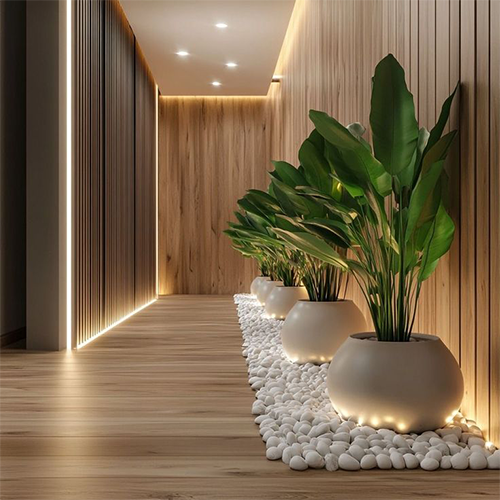
However, in high-end projects, another trend is becoming increasingly visible: the return to natural materials. Architects and designers working on tropical homes in Costa Rica are highlighting wood, stone, metal, bamboo and raw materials to create spaces that feel warmer, more durable and more connected to their environment.
This is exactly where natural stone makes sense.
Ceramic: practical, but often too standardized
Ceramic and porcelain tiles do have real advantages. They are durable, easy to clean and widely available. Porcelain, in particular, is often used in humid or outdoor areas when the right finish is selected.
But their main limitation is aesthetic and sensory. Even when a tile imitates stone, wood or concrete, it remains a manufactured material. The pattern is printed, repeated and calibrated. In a tropical home, a villa with a pool, an open terrace or a high-end landscaping project, this regularity can quickly feel flat, cold or too standard.
Natural stone, on the other hand, does not imitate anything. It is the original material.
Natural stone: a living, premium and timeless material
Each piece of natural stone has its own tones, veins, irregularities and textures. This is exactly what creates its value. Where ceramic seeks industrial perfection, natural stone brings depth, variation and character.
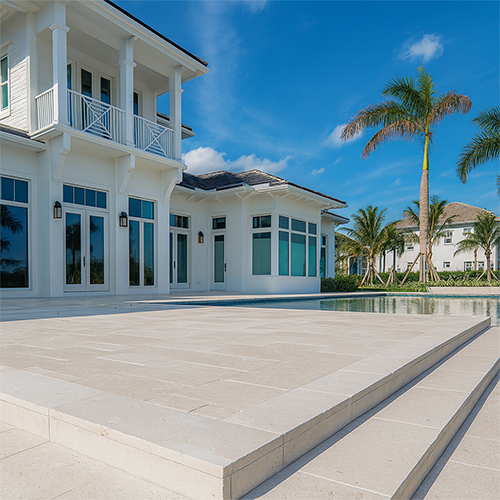
In a country like Costa Rica, where architecture often aims to create continuity between interior spaces, terraces, pools, gardens and vegetation, natural stone becomes a much more coherent choice. It integrates naturally with tropical wood, white walls, concrete finishes and lush landscapes.
Design trends in tropical architecture and eco-luxury in Costa Rica already highlight this search for natural, durable materials that blend into the environment.
In hot climates, comfort matters
In Costa Rica, flooring is not only about aesthetics. It is also about everyday comfort.
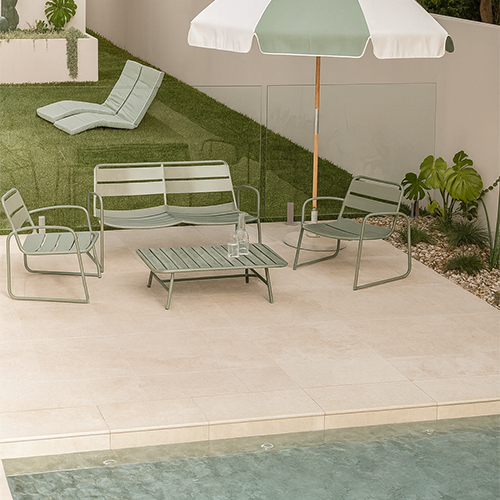
Around a pool, on a terrace or in a sun-exposed patio, some materials can become extremely hot underfoot. Travertine, for example, is known to stay naturally cooler than many outdoor surfaces, thanks to its porous structure and its ability to manage heat. It is also appreciated for its natural grip around pools and wet areas.
This is a key factor for homes in Costa Rica: outdoor spaces are used every day. A terrace, a pool deck or a garden is not secondary. It is a true living space.
Natural stone and property value
In high-end projects, material choices directly impact perceived value. Ceramic can be clean and functional, but it does not always convey a sense of rarity or distinction.
Natural stone, on the contrary, is immediately associated with premium finishes. It gives a project a more architectural, more durable and more authentic dimension. In luxury markets, natural materials such as stone, wood or bamboo are often used to create a stronger connection between the home and its environment.
For a villa intended for resale, high-end rental or long-term personal use, natural stone becomes a strategic choice. It is not just a surface. It contributes to the identity of the space.
Maintenance: natural stone requires common sense
One of the main arguments in favor of ceramic is its ease of maintenance. This is true. Ceramic is practical and low maintenance. Porcelain, in particular, is known for its low porosity and resistance to moisture.
But this does not mean natural stone is difficult. When properly selected, installed and maintained, it can last for decades. Maintenance relies on simple practices: cleaning with water, neutral soap, avoiding acidic or harsh products, and proper installation depending on the project.
The real difference is that natural stone evolves over time. It develops a patina, it lives, it gains character. Ceramic remains identical or shows damage more visibly when it cracks, chips or loses its finish.
Ceramic or natural stone?
Ceramic remains a practical, familiar and accessible option. It can suit certain projects, especially when the priority is budget, speed or a highly uniform finish.
But for a home in Costa Rica that aims to stand out, last over time and create a true high-end tropical atmosphere, natural stone offers a depth that ceramic cannot replicate. It is more alive. More authentic. More premium. More aligned with tropical architecture. Stronger in perceived value.
Conclusion
In Costa Rica, ceramic is still the most common choice. But common does not always mean better.
For villas, high-end homes, renovation projects, pools, terraces, gardens and indoor-outdoor living spaces, natural stone represents a more durable, more elegant and more aligned alternative with current market expectations.
Choosing natural stone is not just choosing a floor covering.
It is choosing a material that brings value, character and a true identity to a project.