

Blog
Travertine Installation Guide & On Site Training Available

How to Properly Install Travertine in Costa Rica
The Complete Technical Guide for a Durable, High End and Natural Installation
Travertine is one of the few materials capable of instantly bringing a sense of luxury architecture to a project. Used for centuries in Mediterranean villas, luxury hotels, and elegant outdoor spaces, it is becoming increasingly popular among architects, builders, designers, and homeowners throughout Costa Rica.
Unlike standard industrial tile, however, travertine is a living natural stone. It contains natural variations, pores, texture differences, and evolves beautifully over time. That is precisely what gives it its character. A successful installation is not about forcing the stone to look “perfect,” but rather about respecting its natural behavior while ensuring stability, drainage, grip, and long term durability.
In tropical climates such as Costa Rica, certain technical details become especially important. Poor drainage slopes, unsuitable mortar, or improperly installed grout joints can quickly turn a beautiful material into a structural or aesthetic problem. On the other hand, properly installed travertine can maintain its appearance for decades with very little maintenance.
Before anything else, it is important to understand that the foundation is the most critical part of the entire project. Travertine should never be installed over an unstable, uneven, or poorly drained surface. Around pools, patios, terraces, and outdoor living areas, the concrete slab must be perfectly stable, clean, and fully cured. A slight slope of approximately 1 to 2% is strongly recommended to allow proper water drainage and prevent standing water. In a humid tropical country like Costa Rica, this step is essential.
Once the foundation is ready, the next step is selecting the installation pattern. The final appearance of a travertine project depends heavily on the layout style chosen.
The 60x40 cm format is generally preferred for contemporary projects. It creates clean, minimal, architectural lines. Modern villas, resort inspired homes, and projects with sleek volumes often use this format because of its elegant and structured appearance.
French Pattern, also known as Versailles Pattern or Opus Pattern, works differently. It combines multiple tile sizes in a repeating layout inspired by old Italian and Mediterranean villas. The result feels warmer, more organic, and visually more natural. Many architects prefer this layout because it softens the linear appearance of the space and creates more visual movement throughout the surface.
One of the most common installation mistakes is laying the pallets one after another without blending them together. Like all natural stone, travertine contains natural color and vein variations. For this reason, it is extremely important to work from multiple open pallets at the same time in order to distribute the natural tones evenly throughout the project. This is what creates the harmonious, high end finish seen in luxury installations.
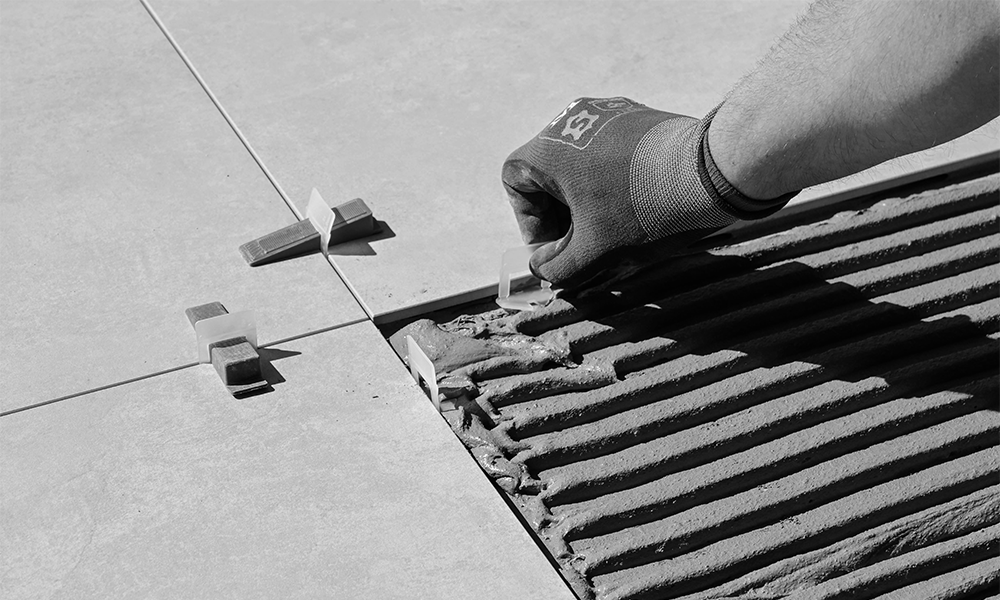
When it comes to the actual installation process, it is recommended to use a flexible thin set mortar specifically designed for natural stone. The double buttering method is also strongly recommended for larger formats and exterior installations. This technique involves applying mortar both to the substrate and to the back of the tile in order to eliminate air pockets, improve adhesion, and evenly distribute weight loads.
This step becomes especially important around pools and in areas exposed to humidity and temperature changes.
During installation, each tile should be lightly pressed and adjusted using a rubber mallet to ensure a perfectly stable and level surface. Cuts should be made with a diamond blade specifically designed for natural stone in order to avoid chipping and maintain clean finishes.
Grout joints are often underestimated even though they play a major role in the final appearance of the project. Very thin joints create a modern and minimalist look, while slightly larger joints create a warmer and more Mediterranean atmosphere.
For 60x40 travertine, thinner joints are generally recommended in order to reinforce the contemporary appearance. French Pattern installations, on the other hand, naturally allow for slightly larger joints, which enhances the authentic and organic character of the layout.
From a technical standpoint, grout joints also play an essential role in absorbing micro movements from the substrate and thermal expansion. Joints that are too tight may eventually lead to cracks, tension, or tile movement, especially outdoors. For this reason, it is recommended to maintain a minimum joint width that allows the stone to naturally breathe and adapt.
Grouting should only be completed once the mortar has fully cured, typically between 24 and 48 hours depending on weather conditions. The grout is then applied using a rubber float while working diagonally across the joints in order to fully fill the spaces without pulling material back out of the joints.
Because travertine is naturally porous, some installers choose to partially fill certain small surface holes using grout in order to create a smoother and more uniform finish. Others prefer to leave the pores visible to preserve a more natural and authentic appearance. Both approaches are commonly used in high end projects.
When it comes to protecting travertine, there are generally two different approaches.
Technically, exterior travertine does not require heavy maintenance or mandatory sealing in order to remain durable. That is actually one of its greatest advantages. Travertine naturally resists heat, humidity, and outdoor conditions while remaining comfortable under bare feet even in direct sunlight. Its naturally slip resistant texture is also one of the reasons why it is so widely used around swimming pools.
However, in practice, many residential and hospitality projects still choose to apply a penetrating sealer in order to reduce absorption from stains, oils, or food spills. It is generally recommended to use breathable, non film forming sealers specifically designed for natural stone.
This is a very important point.
Glossy or surface film sealers are strongly discouraged for exterior travertine. They may alter the natural appearance of the stone, create an artificial finish, reduce slip resistance around pools, and trap moisture inside the material. Breathable penetrating sealers are now the most commonly used solution whenever protection is desired.
Daily travertine maintenance remains relatively simple. It is mainly recommended to clean the surface using fresh water or a neutral soap. Acidic products, harsh descalers, or aggressive chemical cleaners should be avoided, as they may damage and alter the natural stone surface.
One of travertine’s greatest advantages is precisely its ability to age beautifully over time. Unlike many industrial materials that visually deteriorate as they age, travertine gradually develops a natural patina that often enhances its character and authenticity.
For projects in Costa Rica, it is also important to anticipate installation logistics. Large surfaces require proper organization of pallets, cuts, and curing times, especially during the rainy season. Poor job site management may significantly slow down the installation process or create visual inconsistencies throughout the stone.
This is why at Casa Travertino, we regularly assist both professionals and homeowners throughout the installation process of their projects. Depending on the order volume, we can offer a half day technical training session to explain proper installation methods directly to your installation team on site. We can also organize full installation services through our partner crews and provide a project specific installation quotation.
Since every project is different, recommendations may vary depending on the type of foundation, selected format, sun exposure, pool proximity, and desired architectural style. Proper technical guidance from the beginning of the project often helps prevent costly mistakes and ensures a much more durable result.

